Does Windchill Affect Cars? 12 Ways Cold Weather Hits Your Vehicle
Short answer: no, not the way it affects you. Windchill is a measure of how fast exposed skin loses heat. A car is an object with no body heat to strip away, so it never gets colder than the actual air temperature. If it is 10°F outside with a windchill of -10°F, your engine block, battery and tires sit at about 10°F at most.
Wind still matters, though. It speeds up how quickly a warm car cools down, and it pushes cold air through gaps and under the hood. That is why cold weather problems show up fast on windy mornings.
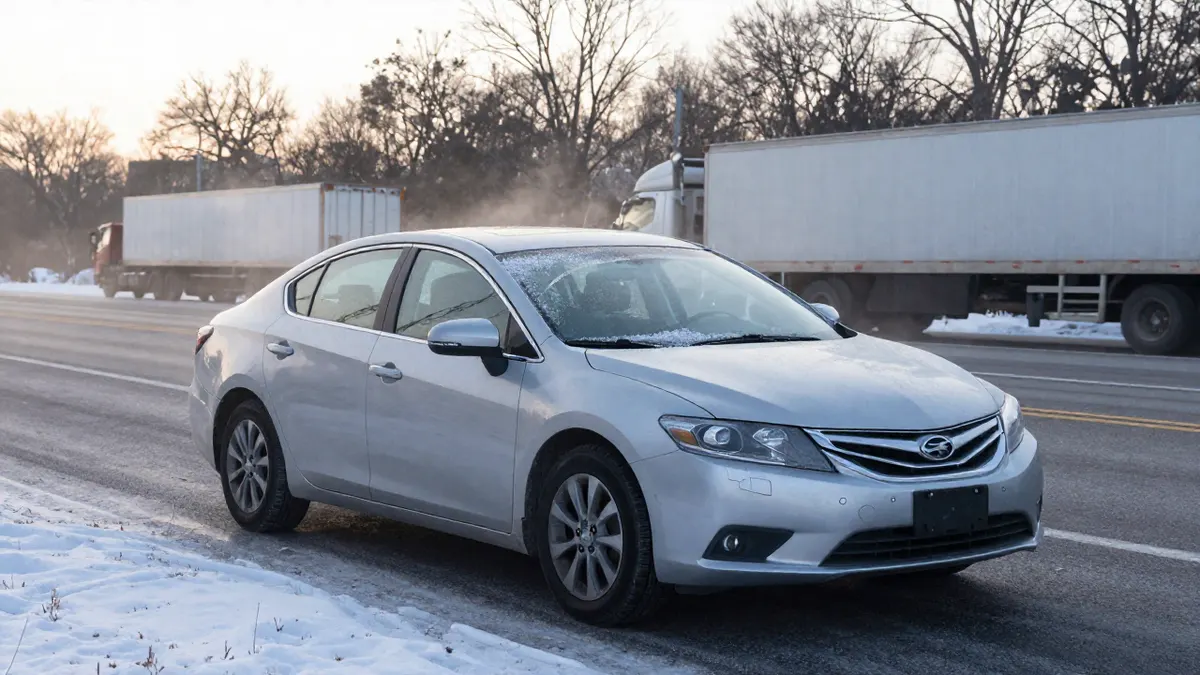
Does Windchill Affect Cars or Only the Air Temperature?
Only the air temperature sets the floor. A parked car left overnight will settle at the ambient reading, whether the air is calm or gusting at 30 mph.
Wind changes the speed of cooling. A car that just finished a drive loses heat much quicker in a gale than in still air. A radiator or exposed fluid line in a strong crosswind can also run cooler than normal, which is why some older vehicles struggle to reach operating temperature on the highway in winter.
So read the real temperature on your dashboard or weather app, not the "feels like" number, when judging risk to the car.
12 Ways Cold Weather Affects Your Car
Battery and starting
A battery loses roughly a third of its power at 32°F and about half at 0°F. Meanwhile the engine needs more current to turn over thick oil. A battery older than 4 years is the usual casualty. Have it tested before December, since many shops do it for free or a small fee.
Tires
Tire pressure drops about 1 PSI for every 10°F of temperature decline. A tire set to 35 PSI in October can read 30 PSI in January. Check it monthly with a cold tire, meaning one that has not been driven.
Rubber also stiffens, so grip falls on summer or worn all-season tires. Below 45°F, winter tires stop better on ice and snow.
Fluids and oil
Oil thickens in the cold and flows slowly at startup. Use the viscosity in your owner's manual, often 5W-30 or 0W-20. Washer fluid should be rated to at least -20°F, and coolant should be a 50/50 mix, which protects to about -34°F.
Other effects worth knowing
- Fuel economy can fall 15% or more on short trips.
- Diesel fuel can gel below roughly 15°F without additives.
- Wiper blades crack and streak as rubber hardens.
- Door seals and locks can freeze shut.
- Brake components can seize if moisture freezes on rotors.
- Road salt speeds up rust on the underbody.
- Suspension bushings and belts get stiff and may squeal.
- Paint and trim can chip more easily on frozen road debris.
How to Protect a Car in Freezing Weather
Park in a garage when you can. Even an unheated one stays 10 to 15 degrees warmer than the street. If you park outside, face the front away from the prevailing wind, which keeps cold air off the engine bay.
Keep the fuel tank at least half full to limit condensation. Wash the underbody after salted roads, and wax the paint in late fall. Carry a basic kit: jumper cables, a scraper, a blanket and a small shovel.
Idling for more than a minute or two is rarely needed on a modern car. Drive gently for the first 10 minutes and the engine warms faster than it does sitting still.
Shipping a Car in Winter
Moving a vehicle across states between December and February brings road salt, ice and long exposure to wind. An open trailer is fine for most cars, but for a classic, a low-clearance sports car or a dark paint job, enclosed carrier protection keeps salt spray and freezing debris off the finish. Expect an enclosed spot to cost roughly 30 to 60% more than open transport.
Winter delays are common, so allow a few extra days on northern routes. If price matters more than speed, the best time to ship a car is often late winter or early fall, when demand eases. Before pickup, lower the fuel to about a quarter tank, check the battery, and note any existing marks on the paint. If you are new to the process, read up on how car shipping works so the paperwork holds no surprises, and ask for car shipping help if a route or timing looks unclear.
Frequently Asked Questions
Does windchill affect cars?
Not directly. Windchill describes heat loss from skin, and a car cannot drop below the real air temperature. Wind can make a warm engine cool faster and push cold air into the engine bay, but a 20°F day with strong wind is still a 20°F day for your battery and fluids.
At what temperature does a car battery fail?
There is no single point. Below 32°F a battery delivers noticeably less power, and near 0°F it may give about half. Old or weak batteries fail first, often on the first cold morning of the season.
Should I warm up my car before driving in winter?
About 30 seconds to a minute is enough for most modern cars. Then drive gently. The engine reaches working temperature faster under light load than at idle, and you use less fuel doing it.
Does cold weather damage a car sitting outside?
It can, mainly through a drained battery, low tire pressure and frozen seals or wipers. A car parked for weeks should be started and driven for 20 minutes or so now and then to keep the battery charged.